
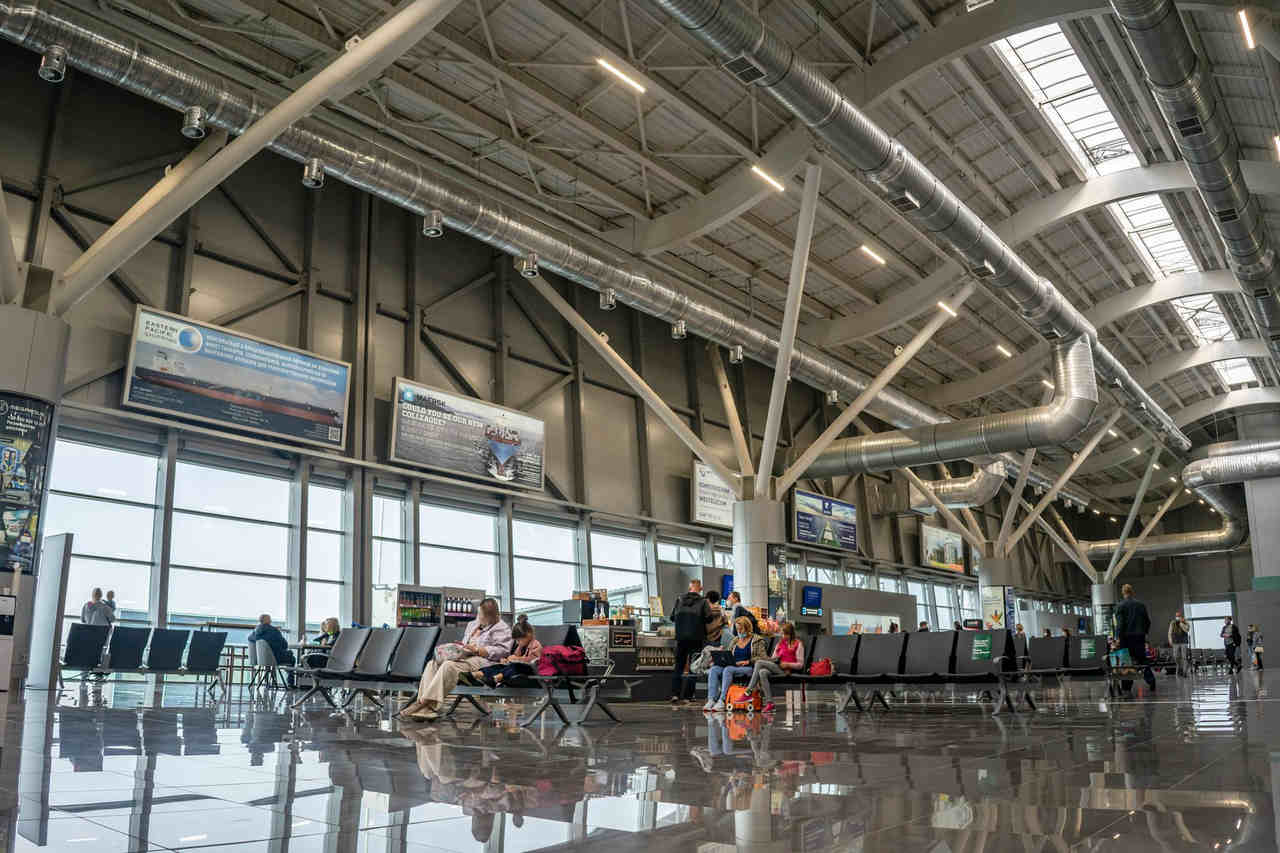
Airports, train stations, bus terminals, and transit hubs all share one problem: a lot of people need somewhere to sit, often for a long time, and the seating has to hold up to constant use. The chairs in a busy gate area might be sat thousands of times a week. That is a very different job from the seating in a quiet office.
This guide walks you through what airport and beam seating actually is, the choices you’ll need to make, and how to pick the right setup for your facility without overspending. It’s written for facility managers, procurement teams, and anyone tasked with furnishing a public waiting area.
What is Beam seating?
Beam seating is a row of connected seats mounted on a single horizontal metal bar, called a beam. Instead of buying individual chairs and lining them up, you get one sturdy, connected unit. You’ll see it everywhere people wait: airport gates, DMV offices, hospital lobbies, and transit stations.
The design has a few big advantages for public spaces:
- It stays put. Because the seats are fixed to a beam, they don’t get dragged around, knocked over, or walked off with.
- It’s easy to clean under and around. Most beams sit on just two or three legs, so cleaning crews can mop the whole row quickly.
- It uses space predictably. You know exactly how much floor each row needs, which makes planning circulation and walkways much simpler.
Common Configurations
Beam seating is modular, so you build the layout around your space. The most common options are:
- Two- to six-seat rows for single runs along a wall or open floor.
- Back-to-back double rows (often 8 to 12 seats) that make efficient use of the middle of a large room.
- Rows with built-in tables or a shared armrest surface, handy for charging phones or resting a coffee.
- Add-on power and USB charging, which travelers increasingly expect while they wait.
If your space has odd corners or heavy foot traffic in certain spots, mixing row lengths usually works better than forcing one size everywhere.
Seat Materials: Pick for Your Traffic and Climate
The seat surface is where most of the wear happens, so this choice matters more than any other. Here are the usual options and where each one shines:
- Perforated or solid metal seats. Extremely tough, vandal-resistant, and the easiest to clean. The perforations let air (and spilled liquid) pass through. Best for the highest-traffic and outdoor-adjacent areas. Trade-off: less cushioning.
- Molded plastic (polypropylene) seats. Lightweight, affordable, available in bright colors, and simple to wipe down. A solid middle-ground for most terminals.
- Upholstered seats (vinyl or commercial fabric over foam). The most comfortable and the most upscale look. Vinyl and polyurethane foam are common because they clean easily and resist stains. Best for premium lounges and longer dwell times.
A quick rule: the longer people sit and the nicer you want the space to feel, the more you lean toward upholstered. The rougher the use and the tighter the cleaning schedule, the more you lean toward metal or plastic.
Frame and beam: what “heavy-duty” should mean
The frame is what carries the load and keeps the row stable for years. When you’re comparing options, look for:
- A steel beam (often a hexagonal or box-section tube) rather than a thin, hollow one.
- Die-cast aluminum or powder-coated steel legs and armrests with an anti-rust finish. Powder coating holds up to scuffs and cleaning chemicals far better than paint.
- Floor-fixing points if the row needs to be bolted down for safety or to meet spacing plans.
Well-made continuous beams are strong enough to span long runs with only a few legs, which is exactly why they’re so easy to clean under.
Don’t overlook safety and compliance
Public seating usually has to meet fire-performance requirements for commercial installations, so check that the foam and upholstery are rated (for example, CAL 117 fire-retardant foam is common in the US). If your facility serves the public, you’ll also want to plan for accessibility: leave clear space and wheelchair positions within seating runs, and keep pathways wide enough to meet local ADA or equivalent rules.
Maintenance: the Cost You Feel Every Day
The sticker price is only part of the story. Public seating that’s hard to clean quietly drains staff time forever. Favor designs with:
- Gaps or perforations that let crumbs and liquids fall through rather than collect.
- Removable or wipe-clean seat surfaces.
- Finishes that shrug off cleaning chemicals.
A seat that takes ten fewer seconds to clean adds up fast when you have a hundred of them.
A Simple Spec Checklist
Before you request quotes, get clear answers on these points:
- How many seats and what layout? Measure your floor and map walkways first.
- What material fits your traffic and vibe? Metal, plastic, or upholstered.
- Do you need power/USB or tables? Decide now; retrofitting is expensive.
- What’s the frame quality and finish? Steel beam, powder-coated, anti-rust.
- Are fire and accessibility requirements met?
- What’s the lead time? In-stock inventory beats a 10-week custom order when you’re on a deadline.
Once you know your specs, buy from a supplier that keeps commercial seating in stock and can ship quickly, because waiting areas rarely have the luxury of a long delivery window. A good example is airport bench seating from InStockChairs, which stocks a genuinely wide range, from backless benches and metal-seat rows to upholstered and “scoop” styles in different colors, with free nationwide shipping. Having options ready to ship makes it much easier to match your budget and timeline instead of settling for whatever a slow custom lead time allows.
The bottom line
Airport and beam seating is a long-term investment in a space that never really gets a day off. Spend your energy on the three things that matter most: a strong steel frame with a durable finish, a seat material that matches your traffic, and a layout that keeps people (and cleaning crews) moving. Get those right, and the seating will quietly do its job for years.