

In today’s fast-paced business environment, contracts are the lifeblood of every organization, governing everything from sales agreements to vendor partnerships and HR policies. However, managing these critical documents can often become a source of bottlenecks, delays, and compliance risks if not handled efficiently. For businesses navigating the complexities of agreements, efficient contract management is no longer a luxury but a necessity for maintaining operational agility and ensuring legal integrity.
Adopting best practices in contract management can transform these challenges into strategic advantages, enabling companies to accelerate deal cycles, minimize errors, and improve their bottom line. By leveraging modern technology, organizations can move beyond manual, paper-based processes to a streamlined, secure, and automated approach that benefits all stakeholders.
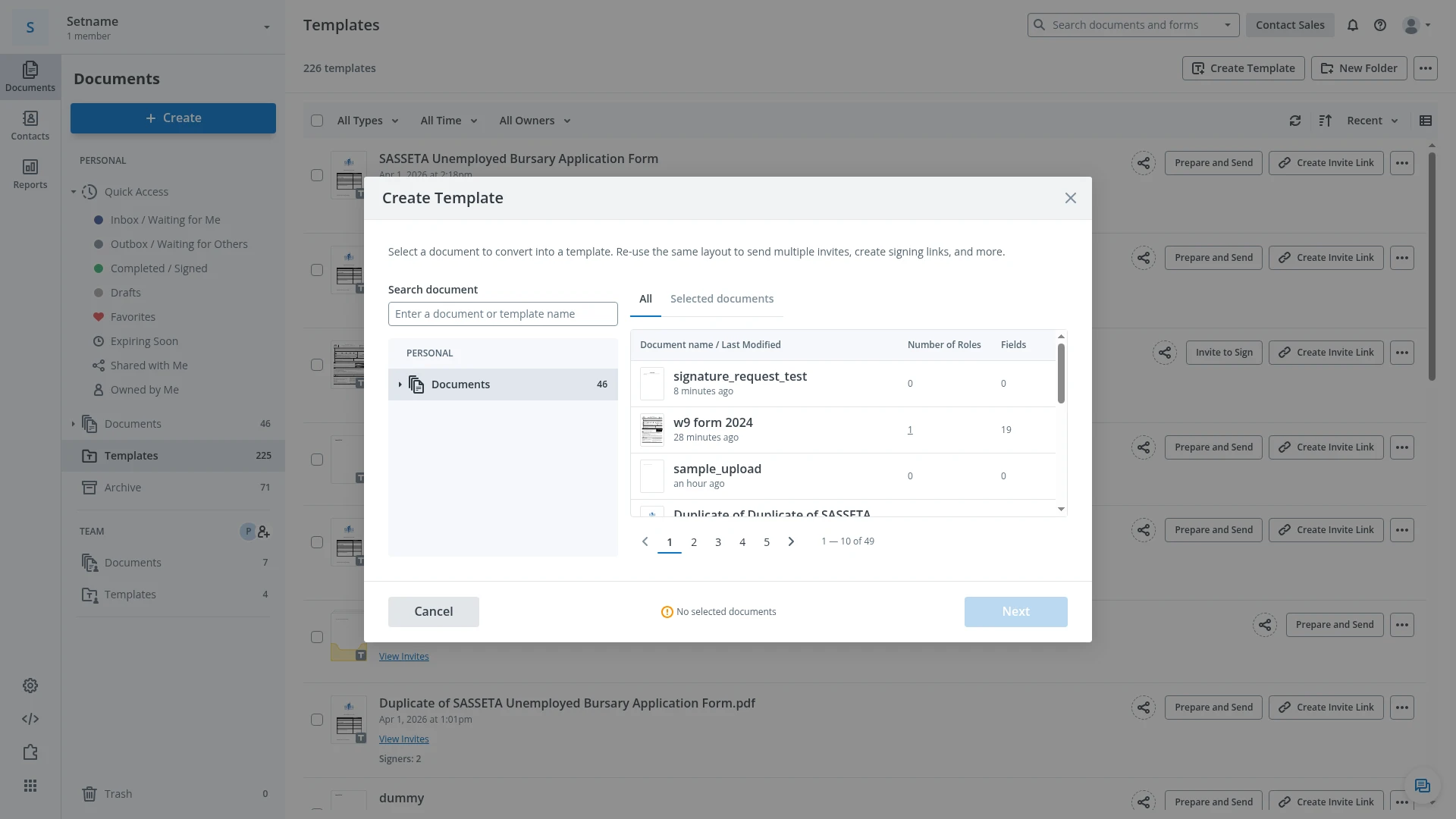
1. Standardize Contract Creation and Templates
One of the most effective ways to accelerate contract cycles and reduce errors is by standardizing the creation process. This involves developing a library of pre-approved templates for common contract types, ensuring consistency and adherence to legal guidelines.
Why it matters:
- Consistency: Ensures all contracts use approved language and terms, reducing legal risk.
- Speed: Drastically cuts down the time spent drafting new documents from scratch.
- Error Reduction: Minimizes the chance of human error associated with manual data entry and custom drafting.
How to implement:
Transform frequently used DOCX or PDF documents into digital templates with custom tags and fillable fields.
Integrate these templates with existing systems of record or cloud applications to auto-populate data, generating pre-filled documents from multiple sources.
Establish clear approval workflows for template modifications to maintain control and compliance.
2. Digitize and Automate Workflows
Manual contract workflows are prone to delays, lost documents, and lack of visibility. Digitizing and automating these processes can significantly enhance efficiency and transparency, from initial drafting to final signature and archiving.
Why it matters:
- Accelerated Cycles: Automated routing and reminders ensure contracts move swiftly through approval stages.
- Reduced Manual Effort: Eliminates repetitive tasks, saving employees valuable time—up to 6 hours per week per employee.
- Improved Tracking: Provides real-time visibility into the status of every contract, identifying bottlenecks immediately.
How to implement:
Implement an eSignature solution that supports role-based signing orders, allowing documents to be sent to multiple recipients in a predefined sequence.
Utilize workflow automation and robotic process automation (RPA) to connect contract negotiation, invoicing, payments, reminders, and renewals into a single, seamless process.
Integrate your eSignature platform with core business tools like Salesforce, NetSuite, MS Dynamics 365, Google Workspace, Box, and Oracle, among 270+ other integrations, to streamline data flow and eliminate manual data entry.
3. Ensure Robust Security and Compliance
The legal enforceability and security of contracts are paramount. Best practices demand that your contract management solution adheres to stringent security standards and regulatory compliance frameworks.
Why it matters:
- Legal Enforceability: Ensures signed contracts hold up in court.
- Data Protection: Safeguards sensitive information against breaches.
- Regulatory Adherence: Meets industry-specific and global compliance requirements.
How to implement:
Choose a platform that provides strong encryption (TLS 1.2/1.3 in transit, AES-256 at rest), an immutable audit trail, and two-factor authentication (2FA).
Verify that the solution complies with key regulations such as SOC 2 Type II, PCI DSS, GDPR (including EU-US DPF), 21 CFR Part 11, CCPA, ESIGN, UETA, and eIDAS. For healthcare-specific needs, ensure HIPAA compliance is available with a signed Business Associate Agreement (BAA).
Regularly review and update security protocols to adapt to evolving threats and regulations.
The legal framework for eSignatures, such as the eIDAS Regulation in Europe and the ESIGN Act in the United States, provides the legal foundation for electronic signatures to be considered as legally binding as traditional wet ink signatures, provided certain conditions are met regarding authenticity and integrity.
4. Centralize Contract Storage and Accessibility
Dispersed contracts across various systems and physical locations lead to inefficiencies, version control issues, and difficulty in retrieval. A centralized, secure repository is crucial for effective contract management.
Why it matters:
- Easy Retrieval: Quickly find any contract when needed, saving time and reducing frustration.
- Version Control: Ensures everyone is working with the most current version of a document.
- Audit Readiness: Simplifies compliance audits by providing a single source of truth for all agreements.
How to implement:
Utilize a cloud-based platform that offers secure storage and robust search capabilities for all signed and in-progress documents.
Integrate the contract management solution with document management systems like SharePoint or cloud storage providers to ensure seamless storage and access.
Implement role-based access controls to ensure only authorized personnel can view or modify specific contracts.
5. Monitor Performance and Leverage Analytics
Continuous improvement in contract management requires ongoing monitoring and analysis of key performance indicators (KPIs). Leveraging advanced analytics can help identify bottlenecks, optimize processes, and inform strategic decisions.
Why it matters:
- Process Optimization: Pinpoints areas for improvement in the contract lifecycle.
- Risk Mitigation: Helps identify potential compliance issues or expiring contracts proactively.
- Strategic Insight: Provides data-driven insights to improve negotiation strategies and contract terms.
How to implement:
Track metrics such as contract approval times, completion rates (which can be as high as 80% with digital solutions), and the number of errors or disputes.
Use built-in analytics and reporting features within your contract management platform to visualize performance data.
Regularly review these insights to make informed adjustments to your workflows and policies.
Common Mistakes to Avoid
- Over-reliance on Manual Processes: Continuing with paper-based contracts or manual routing creates unnecessary delays and costs.
- Lack of Standardization: Creating each contract from scratch or using inconsistent language increases legal risks and slows down processes.
- Ignoring Security and Compliance: Neglecting robust security features and regulatory adherence can lead to data breaches, legal penalties, and loss of trust.
- Siloed Systems: Using disparate systems for eSignatures, document generation, and CRM leads to data discrepancies and inefficient workflows.
- Poor Version Control: Not having a centralized repository or clear versioning can result in using outdated contract drafts, leading to disputes.
Checklist for Effective Contract Management
- [ ] Have you standardized your contract templates and clauses?
- [ ] Is an eSignature solution fully integrated into your contract workflows?
- [ ] Are your contract approval and routing processes automated?
- [ ] Do you have a centralized, secure, and searchable contract repository?
- [ ] Are your contract management practices compliant with relevant industry and legal regulations?
- [ ] Do you regularly track and analyze contract performance metrics?
How to Measure Success
- Reduced Contract Approval Times: Track the average time from contract initiation to final signature.
- Increased Contract Completion Rates: Aim for high completion rates, with digital solutions often achieving 80% or more.
- Fewer Errors and Disputes: Monitor the number of contracts requiring revisions or leading to legal disputes.
- Improved Compliance Scores: Regularly audit your contracts against regulatory requirements.
- Time Saved Per Employee: Quantify the hours saved by automating tasks, potentially up to 6 hours per week per employee.
- Faster Payment Cycles: Observe reductions in invoicing delays and improvements in payment receipt speed.
FAQ
Q: What is an eSignature?
A: An eSignature, or electronic signature, is a legally recognized way to get consent or approval on electronic documents. It’s a digital representation of a person’s intent to sign, offering a secure and efficient alternative to traditional wet-ink signatures.
Q: Is signNow compliant with industry regulations?
A: Yes, signNow is designed to meet stringent security and compliance standards. It adheres to SOC 2 Type II, PCI DSS, GDPR (+EU-US DPF), 21 CFR Part 11, CCPA, ESIGN, UETA, and eIDAS. HIPAA compliance is also available with a signed Business Associate Agreement (BAA).
Q: How does signNow integrate with other business tools?
A: signNow offers extensive integration capabilities, connecting with over 270 popular business applications. This includes major platforms like Salesforce, NetSuite, Microsoft Dynamics 365, Google Workspace, Box, Oracle, and many more, allowing for seamless data flow and automated workflows across your entire tech stack. You can explore more about these integrations on our integrations page.
Q: Can I try signNow before committing to a plan?
A: Absolutely. signNow offers a 7-day free trial that requires no credit card. This allows you to experience the full range of features and see how it can benefit your contract management processes before making a commitment. For detailed information on subscription options, you can visit our pricing plans page.