
Every founder starts with a big idea.
But without a plan, that idea can crash and burn. Fast.
World-class entrepreneurship keynote speakers learn how to steer clear of this trap their whole careers. And they all say the same thing…
The right planning framework can make or break a startup.
Here's the freaky bit: 90% of startups fail within 10 years. And most of those failures can be attributed to bad planning. Not bad ideas.
The good news?
There's a solution. Here are 5 frameworks that the greatest founders (and speakers) use to build businesses that actually stick around.
Let's jump in!
What you'll discover:
- Why Planning Frameworks Matter For Founders
- The 5 Best Planning Frameworks Every Founder Needs
- How To Pick The Right One For Your Business
Why Planning Frameworks Matter For Founders
Planning frameworks give founders a proven roadmap to follow.
Let's say you're growing a business. There are a thousand demands on your time. Email. Meetings. Customer issues. Bugs in your product. Chaos.
A framework cuts through the noise. It gives you:
- A clear system to follow
- A simple way to measure progress
- Focus on what actually matters
That's why most entrepreneurship keynote speakers encourage their audiences to settle on a framework ASAP. Speakers such as Randy Gage remind audiences of the business planning tips that can keep founders focused. Without one, founders tend to chase shiny objects until they run out of money before reaching product-market fit.
Truth bomb: Great founders don't improvise. They strategize. And they use proven frameworks to help them.
Ready to see which ones? Let's dive in.
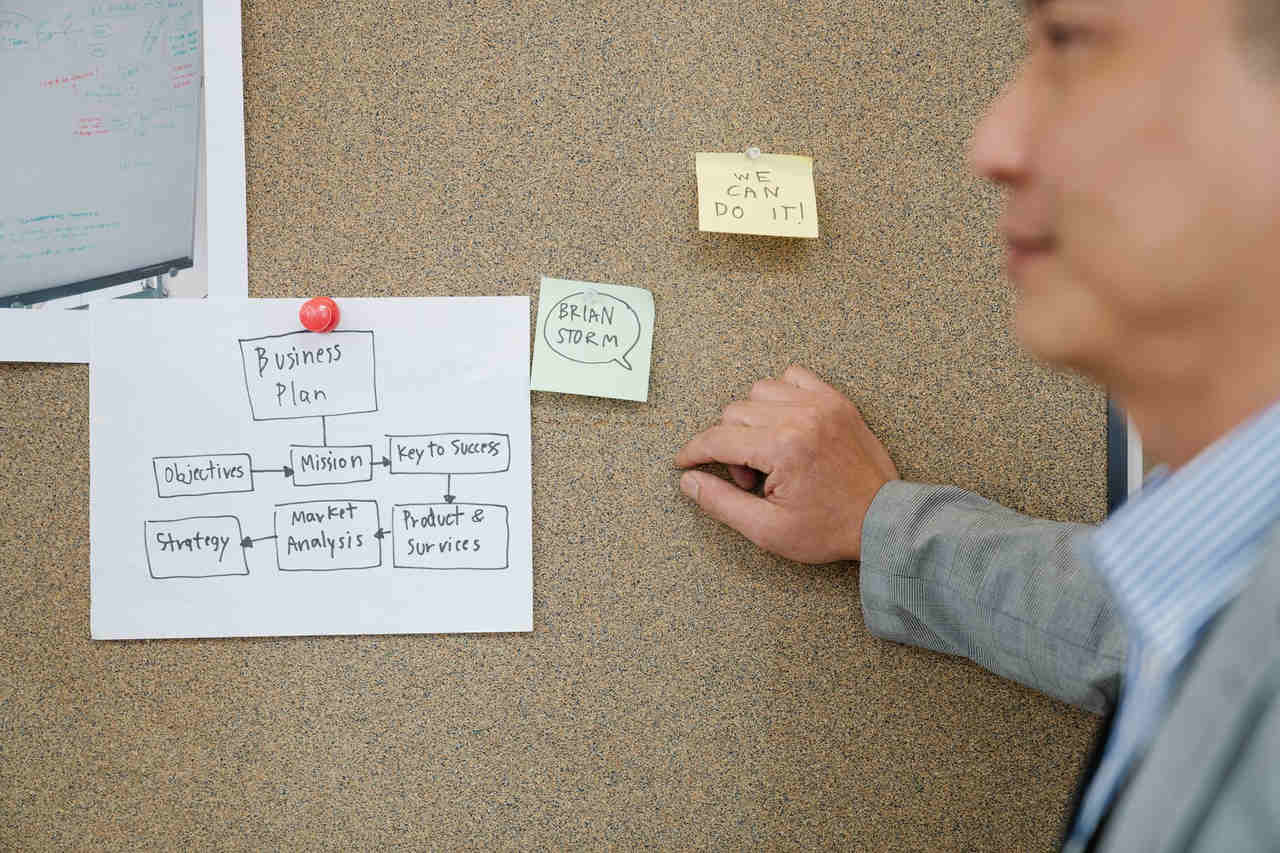
Framework #1: The One-Page Business Plan
A traditional business plan can be 40+ pages long.
No one reads that. Investors do not. The team does not. Not even the founder who wrote it does.
This is why most successful keynote speakers on entrepreneurship recommend the one-page business plan. It makes founders distill their businesses to their core.
A good one-page plan covers:
- The mission and vision
- Target customers
- Core products or services
- Revenue model
- Key milestones for the next 12 months
That's it. Nothing more.
Why does this work? Because it forces you to concentrate. With just one page you can't pad it with flowery language or ambiguous aspirations. Each word must justify its existence.
Entrepreneurs who adopt this framework can pitch their plan to anyone in less than 60 seconds. Powerful stuff.
Framework #2: The SWOT Analysis
SWOT stands for:
- Strengths
- Weaknesses
- Opportunities
- Threats
This is one of the oldest business planning tricks in the book. But you know what? It still works.
Here's why SWOT analysis is still important …Entrepreneurs are too close to their business. They don't see the vulnerabilities. Or opportunities staring them in the face.
SWOT analysis makes founders take a step back and see the big picture. Most frameworks take the form of a basic four-box grid whiteboard or shared document.
Do a SWOT analysis quarterly. It takes only an hour and really puts things into perspective about where your business stands. This is one of the favorite frameworks used by top speakers because it is easy, quick, and can be done with any size business.
Framework #3: The Lean Canvas
The Lean Canvas is the modern version of a business plan.
It was intended for startups who need to pivot quickly. Rather than typing pages of text, you complete a single-page canvas with 9 sections.
Why do entrepreneurship keynote speakers love the Lean Canvas?
The Lean Canvas forces founders to understand the problem BEFORE building the product. Too many startups jump into building something nobody wants. The Lean Canvas helps by putting the customer's problem at the top.
The 9 blocks include:
- Problem
- Customer segments
- Unique value proposition
- Solution
- Channels
- Revenue streams
- Cost structure
- Key metrics
- Unfair advantage
Best of all, the canvas can evolve as lessons are learned along the way. That's what thriving startups require.
Framework #4: OKRs (Objectives and Key Results)
OKRs are how Google, Intel, and hundreds of other big companies plan.
But they work just as well for small startups. Here's the basic idea:
- Objective: What the team wants to achieve (qualitative)
- Key Results: How success will be measured (quantitative)
For instance, an objective can be "Become #1 accounting tool for freelancers". And your key results can reach 10k users, reach $50k MRR, and get 500 five star reviews.
The beauty of OKRs is that they tie the company vision to daily tasks. All employees understand how their work furthers the larger mission.
Leading entrepreneurship keynote speakers suggest setting new OKRs each quarter. This lets your team focus for 90 days, then pivot based on actual performance.
Framework #5: The 90-Day Sprint
Long-term plans sound nice but rarely survive contact with reality.
That's why the "90 day sprint" has become one of the most popular business planning tips for founders. Rather than planning an entire year at once, founders plan only 90 days at a time.
Here's how it works:
- Pick 3-5 major goals for the next 90 days
- Break them down into weekly milestones
- Review progress every 2 weeks
- Adjust as needed
Research indicates that 41% of businesses that invest in marketing are twice as likely to survive. The 90 day sprint allows founders to hyper-focus on high leverage tasks such as marketing instead of busy work.
It works because 90 days is enough time to make real progress, but not enough time to take your foot off the gas. Forget annual goal setting in January only to lose steam in March.
How To Pick The Right Framework
Not every framework works for every founder.
Here's a simple way to choose:
- Just starting out? Use the Lean Canvas.
- Growing a small team? Try the One-Page Plan.
- Need a clear vision check? Do a SWOT.
- Scaling fast? Set OKRs.
- Losing focus? Run 90-day sprints.
Many great founders merge two or three of these. They may shape the business with a Lean Canvas, use OKRs to align the team, and employ 90-day sprints to maintain momentum.
Keep it simple. Choose one framework this week and start using it. That is what all of the best speakers advise.
Bringing It All Together
Planning is the difference between founders who make it and those who don't.
Inside you'll find these 5 frameworks, taken directly from the playbook of the top entrepreneurship keynote speakers in the world. Tried and tested by thousands of founders in every industry. And they work.
The quick recap:
- Start with a One-Page Plan for clarity
- Run a SWOT to see the full picture
- Build a Lean Canvas to test the model
- Set OKRs to align the team
- Sprint in 90-day cycles to keep momentum
Choose one and start today. Your future business-self will thank you.