
Picture opening your closet without an avalanche of boxes tumbling onto your head, or finding exactly what you need in seconds instead of minutes. You've tried organizing before, but somehow clutter creeps back within weeks, leaving you frustrated and overwhelmed. The difference between a temporarily tidy space and one that stays organized isn't about willpower, it's about having a system that actually works. Here's how to build one that'll finally stick.
Start With a Clear Decluttering Plan for Each Room
Before you plunge into decluttering, you need a solid plan that breaks down the overwhelming task into manageable pieces. Start by choosing one room at a time rather than jumping between spaces. This focused approach prevents burnout and delivers visible results that'll keep you motivated.
Create a simple checklist for each room, identifying specific zones like closets, drawers, and surfaces. Set realistic timeframes, don't expect to transform your entire bedroom in an hour. Allocate 30-minute sessions for smaller areas and longer blocks for challenging spaces.
Gather essential supplies beforehand: donation boxes, trash bags, and storage containers. You'll avoid interruptions and maintain momentum. Decide on your sorting categories, keep, donate, sell, or discard, before touching a single item. This predetermined framework eliminates decision fatigue.
Decide What to Keep, Donate, Sell, or Discard
How do you decide which items deserve space in your life and which ones should go? Apply the six-month rule: if you haven't used something in half a year, it's probably time to let it go. Handle each item once and make an immediate decision, hesitation leads to keeping things you don't need.
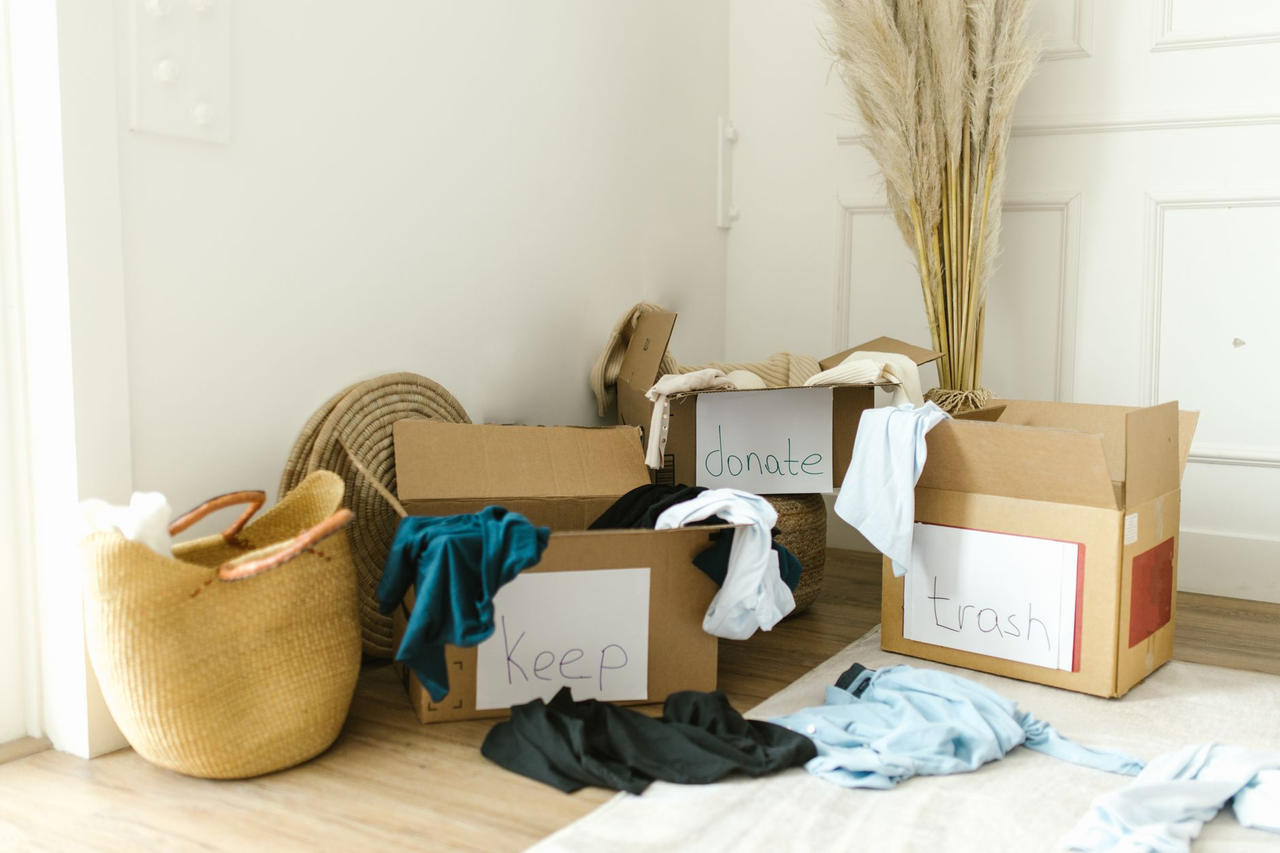
Create four designated boxes: keep, donate, sell, and discard. Keep items you use regularly or truly love. Donate functional items in good condition to local charities. Sell valuable pieces through online marketplaces or consignment shops.
Discard broken, damaged, or expired items immediately. Ask yourself: Does this add value to my daily life? Would I buy this again today? If you're answering no, you've found your answer.
Organize Belongings by Category, Frequency of Use, and Available Space
Once you've sorted your belongings into their respective boxes, it's time to create a strategic system that'll make everything easy to find and access. Start by grouping similar items together, clothes with clothes, tools with tools, documents with documents. This categorical approach simplifies retrieval and maintenance. Next, consider how often you use each item. Place daily essentials within arm's reach, while seasonal or rarely-used belongings can go in harder-to-access areas like high shelves or basement storage.
Finally, assess your available space. Measure closets, drawers, and storage areas before purchasing organizers. Use vertical space with shelving units, maximize drawer efficiency with dividers, and utilize under-bed containers for extra capacity. Label everything clearly. You'll thank yourself later when you're searching for that specific item at midnight.
Use Storage Units for Seasonal, Bulky, or Infrequently Used Items
When your home can't accommodate everything you've organized, storage units offer a practical solution for items that don't fit your daily life but aren't ready for donation. They're ideal for seasonal decorations, sporting equipment, and bulky furniture you'll use later.
Choose a climate-controlled unit for temperature-sensitive items like electronics, photos, and wooden furniture. Standard units work fine for plastic bins and metal tools. Before storing, clean everything thoroughly and use sturdy containers with clear labels. Create an inventory list with photos to track what you've stored and where it's located. Consider the unit's size carefully, you don't want to pay for unused space. Visit the facility to check security features, accessibility hours, and cleanliness before committing to a rental agreement.
Choose Containers, Labels, and Shelving That Make Items Easy to Find
The right organizational systems transform cluttered spaces into functional areas where you'll actually find what you need. Clear containers let you see contents without opening every box, saving time during searches. Label everything specifically, writing "winter scarves" beats "accessories" when you're hunting for something particular.
Install adjustable shelving to accommodate items of varying heights. You'll maximize vertical space while keeping frequently used belongings at eye level. Store similar items together in designated zones, so kitchen supplies don't migrate to random locations.
Choose containers that fit your shelves precisely to eliminate wasted gaps. Stackable bins work well for maximizing floor-to-ceiling storage. Consider drawer dividers for small items that otherwise create jumbled messes. Consistent labeling systems prevent confusion when multiple family members access shared spaces.
Protect Valuable and Fragile Belongings During Long-Term Storage
Before placing cherished items into storage, you'll need protective materials that prevent damage from moisture, temperature changes, and physical impacts. Wrap delicate items individually in acid-free tissue paper or bubble wrap, securing them with painter's tape that won't leave residue. Place heavier items at the bottom of containers and lighter, fragile pieces on top.
Use silica gel packets inside sealed containers to absorb excess moisture that causes mold and mildew. For electronics and metal items, consider climate-controlled storage units that maintain consistent temperature and humidity levels.
Store photographs and documents in archival-quality sleeves or boxes. Never use newspaper for wrapping, as ink transfers and causes staining. Label boxes containing fragile items clearly, and position them where they won't be crushed by other belongings.
Maintain an Organized Home With Simple Habits and Regular Decluttering
Once you've decluttered and stored items properly, you'll want to prevent clutter from accumulating again. Adopt the "one in, one out" rule: when you acquire something new, remove an existing item. This maintains balance and prevents overflow.
Dedicate 10 minutes daily to tidying high-traffic areas like entryways, kitchen counters, and coffee tables. Return items to their designated spots immediately rather than letting them pile up. Schedule quarterly decluttering sessions to reassess your belongings. Remove items you haven't used and donate what others might need.
Create specific homes for everything. When items lack designated spaces, they become clutter. Use labels, bins, and drawer dividers to maintain organization. Handle mail and paperwork immediately, file, recycle, or shred rather than creating stacks. These simple habits transform organization from an overwhelming project into sustainable daily practice.