
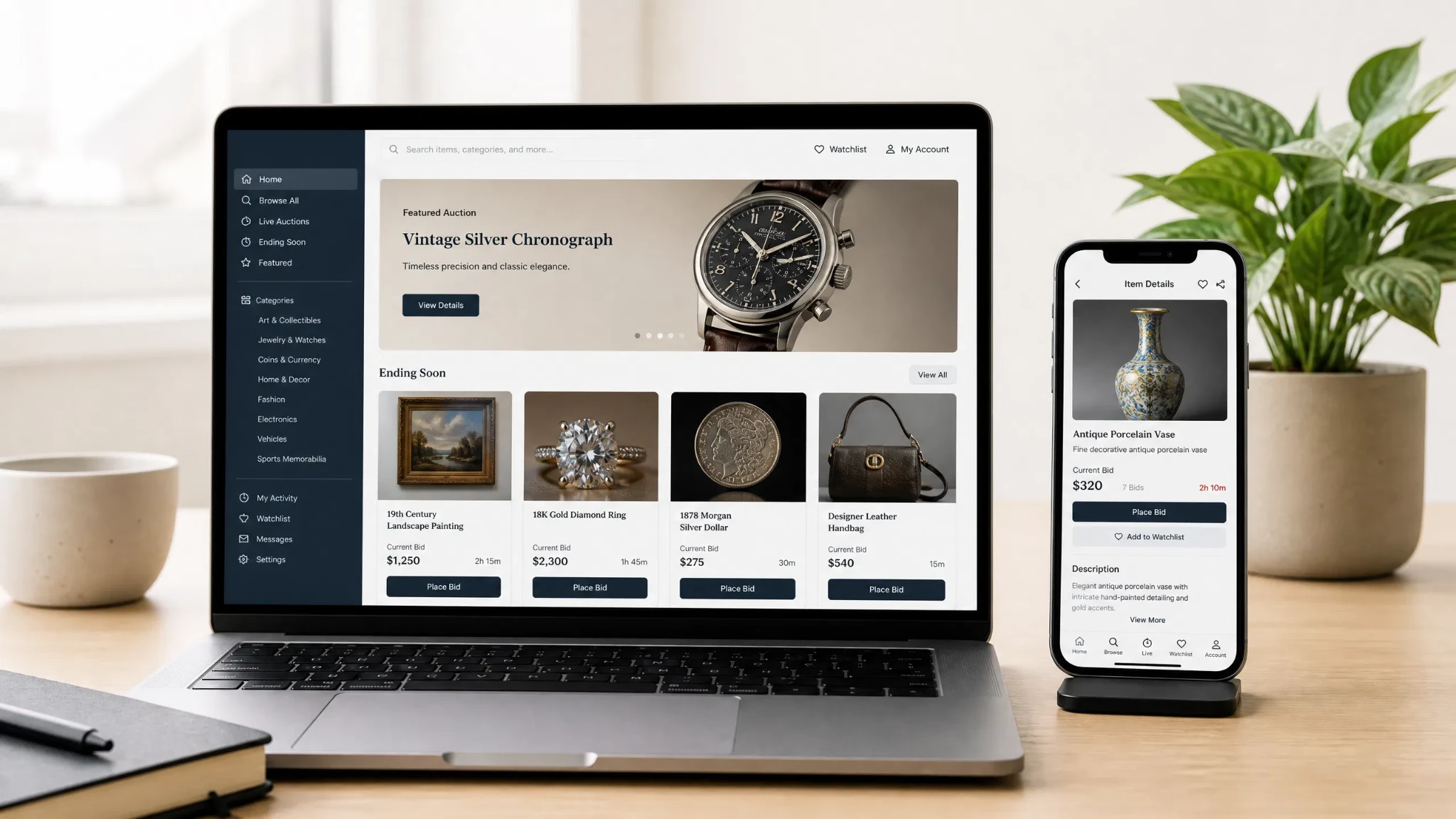
Launching a bidding platform from zero takes months of development, a dedicated engineering team, and a budget most businesses can’t justify. Yet the demand for digital auction tools keeps growing — across real estate, automotive, industrial equipment, and B2B procurement. There’s a faster path: deploying a ready-made solution under your own brand.
What White Label Auction Software Actually Is
The concept is straightforward. You license an existing auction platform from a vendor, apply your branding, configure it to your business rules, and launch it as your own product. Users see your logo, your domain, and your interface — not the vendor’s.
This is different from using a marketplace like eBay or a SaaS tool with visible third-party branding. With white-label auction software, you own the customer relationship and the brand experience entirely. The underlying code and infrastructure belong to the vendor, but everything the user sees and interacts with carries your identity.
When Building From Scratch Stops Making Sense
Custom development has its place — but not always in auction platforms. The core functionality of an auction system (bidding logic, timers, user management, payment processing, notifications) is largely the same across industries. Writing it from scratch means paying to solve problems that have already been solved.
The typical custom build takes 6 to 18 months and requires specialists in backend infrastructure, real-time data handling, and payment compliance. By the time you launch, competitors using white-label solutions have already been running for a year, iterating based on real user feedback.
There’s also the ongoing cost. Maintenance, security patches, and feature updates don’t stop after launch. A custom platform ties your team permanently to that infrastructure.
Core Features to Evaluate Before Choosing a Platform
Not all white-label auction tools are built the same way. Before committing to a vendor, the feature set needs to match your actual use case — not just a generic checklist.
- Bidding formats. The platform should support the auction types your buyers expect. English (ascending), Dutch (descending), sealed-bid, and reverse auctions all serve different markets. A real estate platform needs different logic than a procurement tool.
- Real-time bid updates. Latency matters in live auctions. If bids don’t update instantly for all participants, trust breaks down fast. Look for WebSocket-based architecture or equivalent.
- White-label depth. Some vendors let you change colors and add a logo. Others give you full control over domain, email templates, notification copy, and mobile app branding. Know what level of control you need before comparing prices.
- Payment and compliance integration. Escrow handling, buyer premiums, and tax calculation vary by jurisdiction. The platform should either handle these natively or integrate cleanly with your existing payment stack.
Skipping a proper feature audit before signing is one of the most common mistakes operators make. A platform that works beautifully for jewelry auctions may be completely unsuitable for industrial asset liquidation.
How the Launch Process Typically Works
The timeline from signing a vendor contract to going live is usually between 4 and 12 weeks, depending on customization depth and how much existing content or inventory you’re migrating.
Most vendors follow a similar onboarding structure. First comes the technical setup: domain configuration, SSL, and connecting your payment processor. Then branding is applied — colors, fonts, logo placement, and email templates. After that, you configure business rules: auction durations, reserve prices, buyer premiums, and registration requirements.
Testing before launch matters more than most operators expect. Run complete auction cycles in a staging environment. Verify bid notifications, payment flows, and edge cases like tie bids or connection drops during live auctions. Small issues found in testing are manageable. The same issues discovered during a live event cause real damage to your reputation.
Pricing Models You’ll Encounter
Vendors structure their pricing in a few different ways, and understanding the model before you commit affects your unit economics significantly.
- Monthly SaaS fee. A flat recurring charge regardless of transaction volume. Predictable costs, but can be expensive in the early months before you hit scale.
- Revenue share. The vendor takes a percentage of each transaction. Lower upfront cost, but your margins compress as volume grows. Works well for early-stage launches.
- Per-auction or per-lot pricing. You pay based on how many auctions or individual lots you run. Useful if your volume is inconsistent or seasonal.
Some vendors combine models — a base monthly fee plus a small transaction percentage. Get clarity on what’s included in each tier and what triggers additional charges, especially around storage, API calls, or dedicated support.
What You Can and Can’t Control as an Operator
Understanding the boundaries of your control over a white-label platform saves frustration later.
You typically control the brand presentation, the auction rules and parameters, the seller and buyer experience, communication templates, and fee structures visible to your users. You also control which categories or item types are allowed on your platform.
What you usually don’t control: the core bidding engine code, the server infrastructure, and the vendor’s own update and maintenance schedule. If the vendor pushes a platform update that changes a workflow you’ve built around, you adapt to their timeline. This is the tradeoff for not building your own — and for most operators, it’s a reasonable one.
Some vendors offer source code licensing or self-hosted deployments for clients who need more control. These options exist, but they shift more of the maintenance burden back to you.
Choosing a Vendor Worth Trusting With Your Brand
Your reputation is attached to the platform’s reliability. If auctions fail mid-event, bidders blame you — not the software vendor behind the scenes.
Look for vendors with verifiable uptime records, not just marketing claims. Ask for case studies from clients in your specific industry. Find out how support is handled during live auction events — is there a dedicated channel, or are you filing tickets and waiting?
References from existing clients matter more than feature demos. A vendor who makes it difficult to connect you with references is telling you something.
Conclusion
White-label auction software removes the barrier of custom development without removing your ability to build a distinct, branded platform. The tradeoffs are real — you work within a vendor’s infrastructure and update cycle — but for most businesses entering the auction space, the speed and cost advantages outweigh the limitations. Choose the vendor carefully, test thoroughly before launch, and treat the first few live events as learning opportunities rather than finished products.